When people think about smart lighting, they often think about convenience — voice control, automated schedules, and energy savings. But for many individuals with disabilities, sensory sensitivities, or age-related challenges, smart lighting represents something much more meaningful: independence, comfort, and a greater sense of control over their living environment.
This raises a question worth examining: can thoughtful lighting design and intelligent controls transform a home from a source of stress into a place of predictability and calm? The evidence — from research and from the lived experience of users and caregivers — suggests the answer is yes. And understanding why requires looking at lighting not merely as illumination, but as an environmental tool that shapes comfort, behavior, and safety.
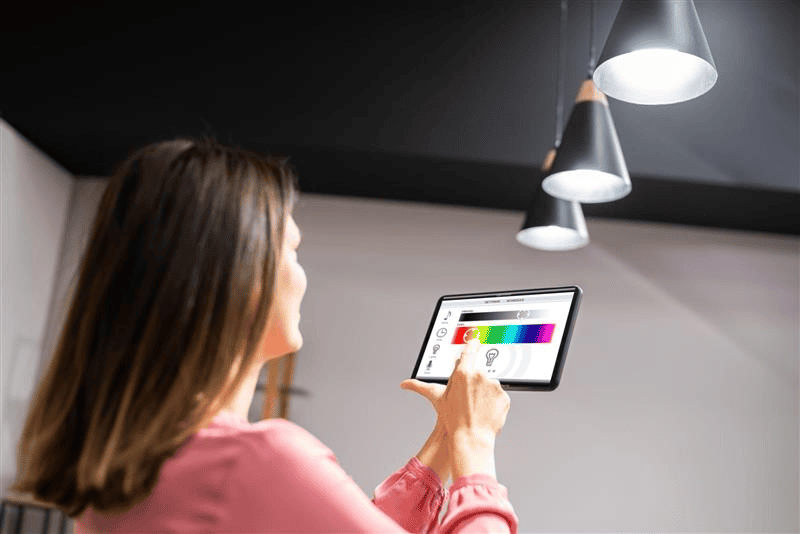
Smart lighting solutions for people with disabilities help create environments that adapt to individual needs instead of requiring people to adapt to their surroundings.
For autistic or sensory-sensitive individuals, the built environment can be overwhelming. Harsh overhead light, abrupt changes in brightness, and even imperceptible flicker can trigger distraction or genuine distress. In an accessibility context, the goal is not simply to offer adjustability — it is to give the user control over their sensory environment in a way that feels intuitive and non-threatening.
The practical tools are straightforward: smooth dimming across a wide range, tunable white technology that shifts correlated color temperature (CCT) from warm (2700K) to cool (5000K+), and fade-to-off transitions that eliminate the jarring effect of instant switching. Smart LED systems that support gradual scene transitions, customizable preset levels, and simple physical interfaces — rather than app-only control — align with what occupational therapists and accessibility specialists have long recommended.
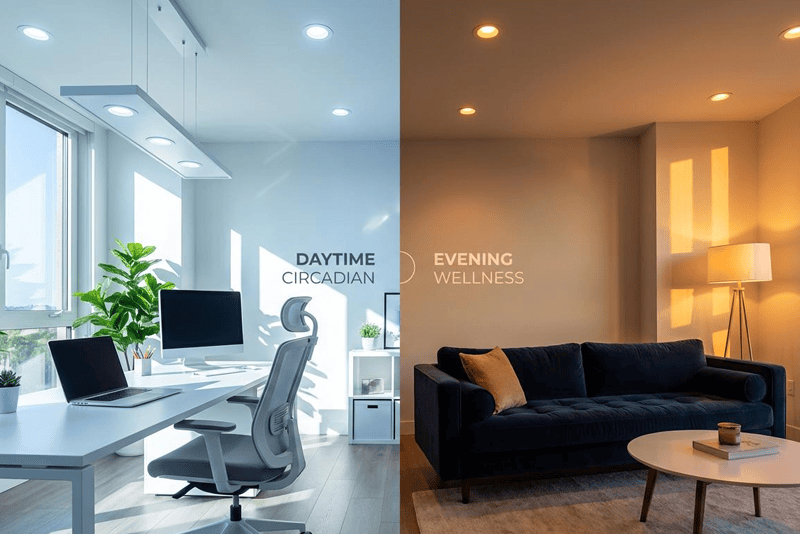
Human-centric lighting for accessible homes allows users to adjust brightness and color temperature based on different activities, preferences, and daily routines.
For individuals who benefit from structured routines — including many autistic children and adults, as well as those with early-stage cognitive decline — light can serve as a gentle, ambient prompt. A daily sequence might look like this: warm, dim light at wake-up that gradually brightens over 20 minutes, signaling the start of the day; a shift to cooler, more alerting color temperature in the kitchen during meal preparation; a soft amber tone in the evening that cues the transition toward sleep.
These are not novel features to lighting professionals — circadian lighting has been a dominant topic for years. But in the context of accessible design, these transitions take on a different meaning. They reduce the cognitive load of decision-making. They create environmental rhythms that feel natural rather than imposed. The Illuminating Engineering Society's guidance on human-centric lighting and the WELL Building Standard's Light concept both emphasize lighting that supports circadian entrainment — principles that are equally valuable, if not more so, for neurodiverse populations.
Lighting solutions for elderly and disabled people should prioritize safety, visibility, and ease of use.
Falls are one of the leading causes of injury among older adults, and nighttime trips to the bathroom represent a disproportionate share of those incidents. Traditional solutions — leaving bright lights on, using plug-in nightlights with fixed output — address visibility but often at the cost of sleep quality.
Motion-activated LED systems with very low output, positioned at floor level or integrated into stair treads and baseboards, provide a more sophisticated answer. When a sensor detects movement, the pathway illuminates softly — enough to navigate safely, but not enough to suppress melatonin production or disturb a partner's sleep. The key specification is not raw brightness but glare control, spectral composition, and the gentleness of the on/off transition.
This application illustrates a broader principle: the best accessible lighting is often invisible until needed, and unobtrusive when present. It works in the background, supporting autonomy without drawing attention to itself.
Across all user populations — autistic individuals, older adults, people with mobility or cognitive challenges — one theme recurs: the importance of personal control. A system that works beautifully for one person may be unusable for another. Sensitivity to brightness, color, and transition speed varies widely, and what feels calming to one user may feel disorienting to another.
This is where the distinction between "smart" and "adaptive" becomes critical. A smart system that offers a dozen preset scenes but requires a smartphone to reconfigure them places an unnecessary barrier between the user and their environment. An adaptive system — one that can be adjusted through multiple interfaces including wall controls, voice commands, caregiver dashboards, and scheduled automation — treats personalization as a baseline, not an upgrade.
For manufacturers and specifiers, the implication is clear: flexibility and simplicity must coexist. Interfaces should be accessible to users with varying levels of technical literacy. Override mechanisms should be obvious and immediate. And the default settings should prioritize gentleness over drama.
The accessible lighting market is often framed as a specialty segment — an afterthought addressed through niche products or healthcare channels. But the demographics argue otherwise. The World Health Organization estimates that over 1.3 billion people worldwide live with some form of disability. Aging populations in North America, Europe, and Asia are growing rapidly, and cognitive health concerns touch nearly every extended family.
Inclusive lighting is not a specialty segment — it is a design philosophy that, when adopted broadly, benefits every user. The same tunable white system that helps an autistic child regulate sensory input also helps a shift worker manage circadian disruption. The same motion-activated pathway lighting that prevents falls for an 85-year-old also welcomes a guest who arrives late at night.
If lighting technology can so precisely shape comfort, behavior, and safety in the home, then how should designers, manufacturers, and building professionals balance innovation with their responsibility to serve the full spectrum of human need? The answer will determine whether smart lighting fulfills its promise — not as a luxury, but as a genuine instrument of equity and inclusion.
Accessible lighting design creates safer and more comfortable spaces by considering different physical, sensory, and cognitive needs. It goes beyond standard illumination to address how brightness, color temperature, controls, and placement affect people with varying abilities.
Smart lighting allows users to control brightness, color temperature, and lighting schedules through voice commands, sensors, or automation. This gives individuals greater independence over their environment without requiring physical interaction with switches or apps.
Features such as dimming control, tunable white lighting, motion sensors, and voice control can make homes easier and safer to use. Gradual fade transitions, low-glare pathway lighting, and customizable preset scenes are especially valuable for sensory-sensitive users and older adults.
While accessible lighting is essential for individuals with disabilities, it also benefits older adults aging in place, families with young children, shift workers managing circadian disruption, and anyone who values a more comfortable and adaptable home environment.

