
 Tiéng ViêtVNTiéng ViêtVN
As the need to reduce carbon in buildings grows, owners and facility managers have a key question: Where should they start? HVAC modernization, envelope upgrades, and renewable energy installations are all impactful, but they are also capital-heavy and disruptive. Lighting, by contrast, offers a different path—one that is accessible, fast, and remarkably effective. This brings us to the core question guiding this article:
Can lighting upgrades deliver the fastest and most measurable carbon savings in commercial buildings? A growing body of research, alongside real-world retrofit projects, suggests the answer is yes. And understanding why requires looking at lighting not only as an energy load, but also as a digital infrastructure that enables smarter, more efficient buildings.
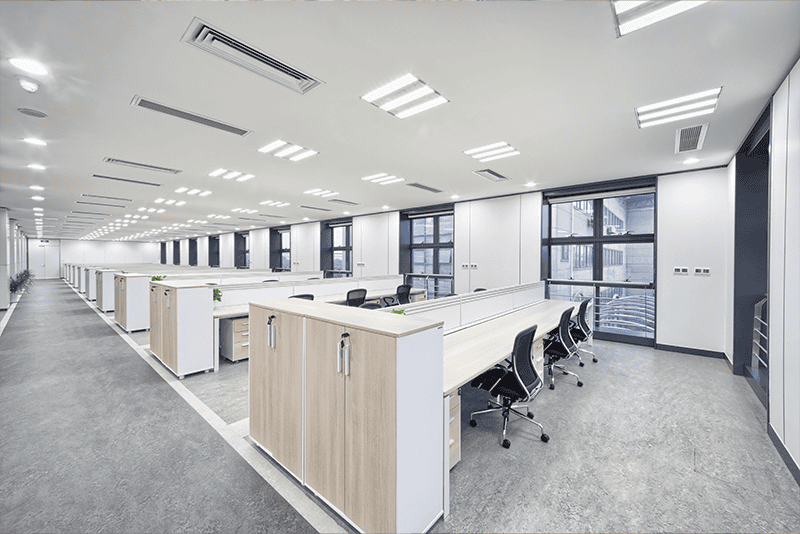
Lighting is one of the most energy-intensive systems in buildings that operate for long hours — especially in markets like lighting in Singapore, where commercial environments often run nearly continuously. Offices, hotels, schools, and retail areas rely on illumination throughout the day, and many partially occupied zones remain lit even when not in use.
Because lighting touches almost every occupied space, inefficiencies accumulate quickly. This makes outdated fluorescent or halogen systems a major source of avoidable energy consumption. Replacing them with modern LEDs provides an immediate, measurable reduction in electricity demand.
What makes LED retrofits particularly strategic is their low disruption. They can be installed zone by zone, without shutting down operations, while offering predictable and reliable carbon savings. For building owners seeking fast ESG gains, lighting becomes the most accessible and effective starting point.
Once LEDs establish a more efficient baseline, the next stage of carbon reduction comes from eliminating hidden waste — the energy used by lights that stay on when they are not needed. Many buildings still operate on fixed schedules, assuming constant occupancy even though actual activity varies widely.
Smart controls address this mismatch. Systems equipped with occupancy sensing, scheduling, task tuning, and daylight response automatically adjust lighting to real-time behavior. Meeting rooms dim between sessions, open-plan offices adapt to hybrid schedules, and corridors respond to traffic flow instead of staying fully illuminated.
In regions with abundant natural light, as seen in many lighting in Singapore settings, daylight harvesting further reduces the need for artificial lighting. This approach not only cuts energy use but also reduces indoor heat load, contributing to a more comfortable and balanced environment.
Modern lighting infrastructure has evolved beyond simple illumination. Because it is present in every important area of a building, it forms a dense and continuous sensing layer capable of gathering occupancy data, movement patterns, environmental conditions, and local light levels.
When this data flows into a Building Automation System (BAS), lighting helps coordinate decisions across HVAC, shading, and space management. A reduction in occupancy detected by lighting sensors can trigger lower ventilation rates; daylight sensors can inform automated blinds to balance brightness and energy efficiency.
This integration unlocks deeper operational savings and extends asset life, strengthening the building’s overall carbon return on investment. In progressive markets — including commercial sectors exploring advanced lighting in Singapore solutions — lighting is increasingly recognized as the core digital infrastructure enabling smarter, lower-carbon buildings.
Lv, Q. (2025). Intelligent building design based on green and low-carbon concept. Energy Informatics, 8(1), 1-18.
Deakin, M., & Reid, A. (2018). Smart cities: Under-gridding the sustainability of city-districts as energy efficient-low carbon zones. Journal of Cleaner Production, 173, 39-48.
Li, P. (2025). Application of smart home system in building thermal optimization simulation: A low-carbon building design scheme. Thermal Science and Engineering Progress, 59, 103280.