At NVC Lighting, we believe that lighting is not just about visibility—it's about enhancing the human experience. Our approach to lighting design integrates advanced circadian principles, ensuring that every light source supports your well-being throughout the day. As we spend most of our lives indoors, it's crucial to rethink how artificial lighting impacts our natural biological rhythms.
Many people have experienced the feeling of sluggishness despite adequate sleep, often due to poorly designed lighting that disrupts the body's circadian rhythm. With the widespread use of static, artificial lighting—commonly referred to as "frozen lighting"—we often find ourselves out of sync with the natural progression of daylight. This misalignment can lead to what is commonly known as "social jet lag," a chronic state of fatigue and lack of focus.
By integrating circadian lighting systems, we aim to harmonize artificial lighting with natural cycles. Through a strategy rooted in the "Sunlight Benchmark," we replicate the evolving colors of natural daylight—helping to synchronize our internal clocks and foster better sleep patterns, improved mood, and heightened productivity.
Our eyes serve as the most critical sensory input for regulating our internal clocks, making light a powerful biological signal. Exposure to the right light at the right time triggers the release of two key hormones: cortisol and melatonin. These hormones work in tandem to govern our wakefulness and sleep cycles.
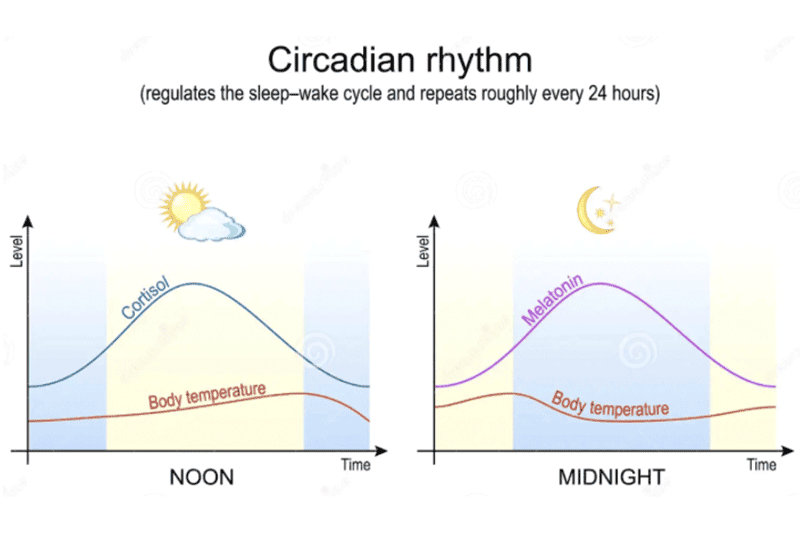
In an ideal world, our bodies would naturally synchronize with the sun's rhythm. However, modern technology—such as the artificial blue light from screens—often confuses this system, delaying sleep and disturbing our biological clocks. Optimizing lighting throughout the day can realign this natural rhythm and improve both sleep quality and daytime performance.
One of the most critical yet overlooked aspects of lighting design is color temperature, which can drastically affect how we feel in a space. While brightness is often a primary consideration, it is the color temperature that determines whether a room feels invigorating or relaxing. By understanding and applying the correct color temperatures, we can create an environment that supports both mental clarity and relaxation.
Color temperature is measured on the Kelvin (K) scale. To decode this:
By aligning your lighting with the natural progression of the day, you can enhance your space’s atmosphere and boost your overall well-being.
A significant aspect of effective circadian lighting involves the concept of layered lighting—combining various light sources that can be adjusted throughout the day. This dynamic approach allows you to optimize your environment for different activities, ensuring your lighting matches your circadian needs.
For example:
Creating distinct zones within your home ensures that your body receives the right cues at the right time, helping to regulate your circadian rhythm and promote better sleep.
Many people experience a natural dip in energy during the afternoon. This "slump" often coincides with insufficient exposure to bright, natural light. To combat this, using cool-toned, high-intensity lighting in your workspace can help maintain focus and prevent fatigue.
However, it's essential not to overdo it. As the day winds down, switching to warmer light helps to signal to your brain that it's time to relax. By using tunable LEDs that gradually shift from bright to warm, you can automate this transition, enhancing productivity without interfering with your evening rest.
You can begin optimizing your space right away with these three simple steps:
By implementing these strategies, you can start aligning your lighting with your body’s natural rhythms, improving sleep quality, boosting energy, and enhancing productivity.

